1800 998 122Contact

Pacific Tag

Rev Cyrus Kung, Church Engagement Manager (SA & WA) at UnitingWorld reflects on his recent visit to Tacloban:
“I sat in a humid room in Tacloban City, Philippines, listening to Filipino theologians speak about what it means to follow Jesus in their context.”

I was there with Rev Philip Gardner, General Secretary, SA Synod, and Dr Sureka Goringe, UnitingWorld National Director, representing the Uniting Church in Australia at the 13th Quadrennial General Assembly of the United Church of Christ in the Philippines (UCCP).

Tacloban knows something about resilience. Many will remember its name spoken in the same breath as the devastation of Typhoon Haiyan in 2013*. To sit there, more than a decade later, among Christians full of faith and fire, was itself a kind of sermon.

The Assembly gathered under a theme simple and demanding in equal measure: “Walking with Jesus: Journeying with the Anawim”.

Anawim is a Hebrew word referring to the bowed-down ones, the poor, those who have nothing left to lean on except God.In Mary’s Magnificat, the Anawim are the ones God lifts while the proud are scattered. And in Jesus, God doesn’t send the Anawim a message from a safe distance – God becomes one of them, entering the story from the bottom.

I had read of this theology before, but I was struck when I heard it spoken by people for whom it isn’t academic.They weren’t reflecting on poverty from a comfortable distance. They were reflecting on it from within and finding, in Jesus, a living reason to keep going. I thought of the communities we walk alongside in Australia: the newly arrived, the isolated, the ones for whom Sunday morning is the one place they feel truly seen. Different context, same gospel. The same Jesus who moved toward the least and the lost calls us to do the same.

This is what partnership through UnitingWorld means. We may be far away, but we are walking the same road. When we support our UCCP sisters and brothers, through prayer, through giving, through showing up, we are not offering charity from above.

We are joining a journey already underway, toward a world where the hungry are filled, the bowed-down are lifted, and no one is left behind.

* In 2013 Typhoon Haiyan, also known as Super Typhoon Yolanda in Philippines, caused over 6000 deaths in Philippines. Because the Tacloban area has a high population in low-lying areas, it was a major centre of devastation and loss of life.
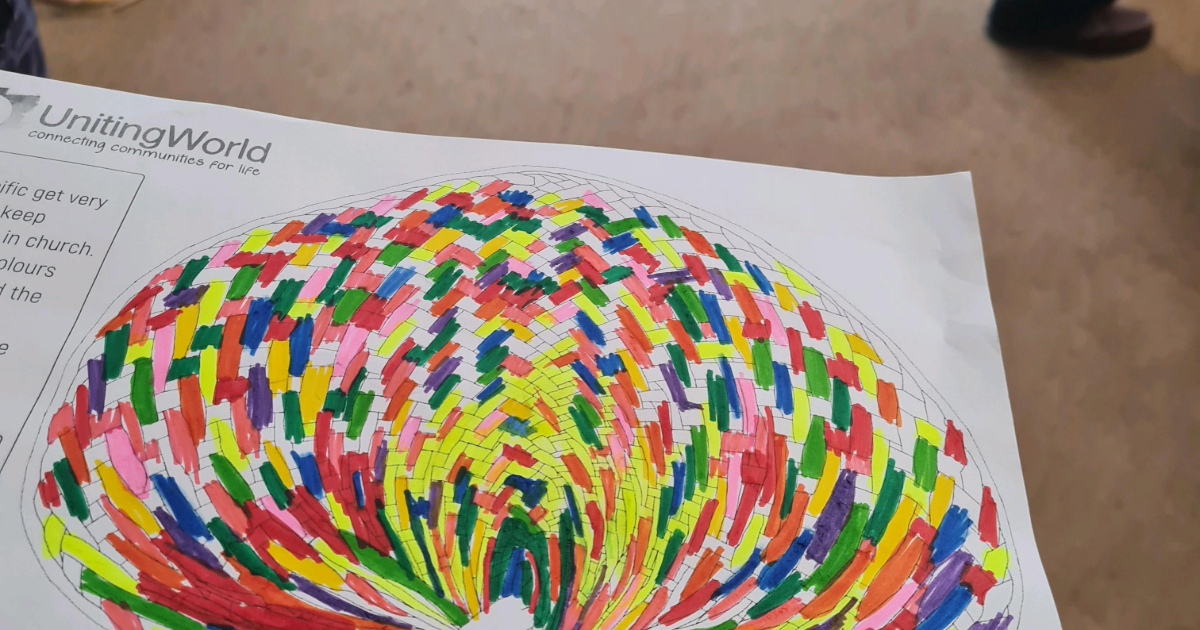
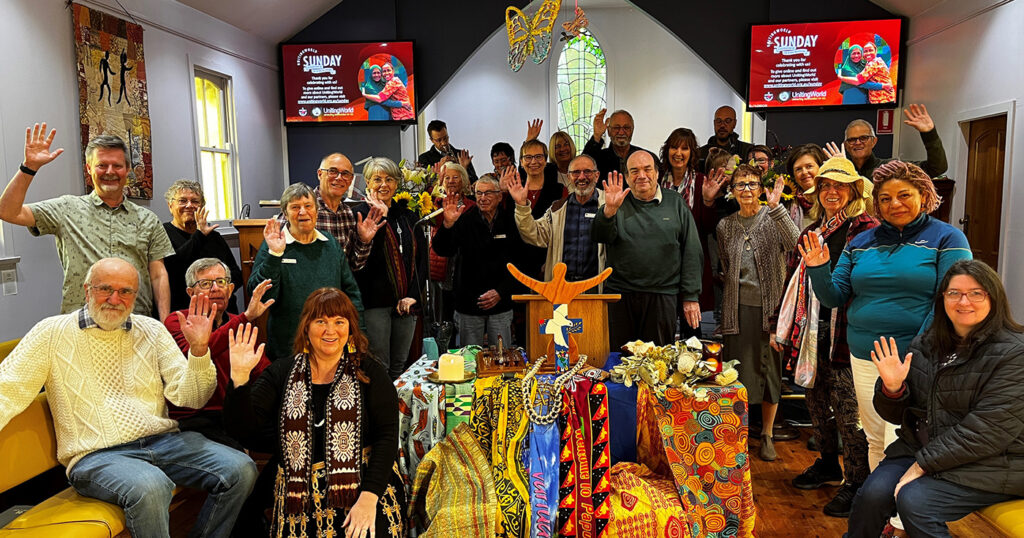
When Antony McMullen, Church Engagement Manager for Vic/Tas, visited Bacchus Marsh Uniting Church, the congregation experienced a shared act of learning, listening and reflection, exploring climate justice from the perspective of communities across the Pacific.

Antony facilitated a simulation game that invited people to think about unequal power relationships and the very different impacts of climate change.

The room was divided into two teams: one representing Pacific Island communities and one representing Australia. A children’s colouring activity brought brightness and creativity into the room. The simulation helped show, in a clear and practical way, that those who have contributed least to climate change are often among those who face its sharpest effects.

This is not an abstract issue. For UnitingWorld’s partner churches across Asia, Africa and the Pacific, climate change affects homes, livelihoods, food security, safety and the future of whole communities.

Our partner churches are at the heart of local responses, walking alongside people through change, loss and hope. The activity did not try to offer easy answers. Instead, it opened space for deeper awareness and care, using gentle humour to help the congregation engage with a serious topic.

The visit reflected something central to UnitingWorld’s work: partnership begins with listening. It grows through mutual respect, prayer, learning and shared responsibility.

Australian congregations have a role to play by standing with our partner churches, supporting locally-led work, and keeping climate justice before our communities.

It reminded us that our relationships across the Pacific are not distant or symbolic. They are part of who we are as a church.

UnitingWorld gives thanks for congregations who continue to learn, pray, give and act in support of partner churches across Asia, Africa and the Pacific.

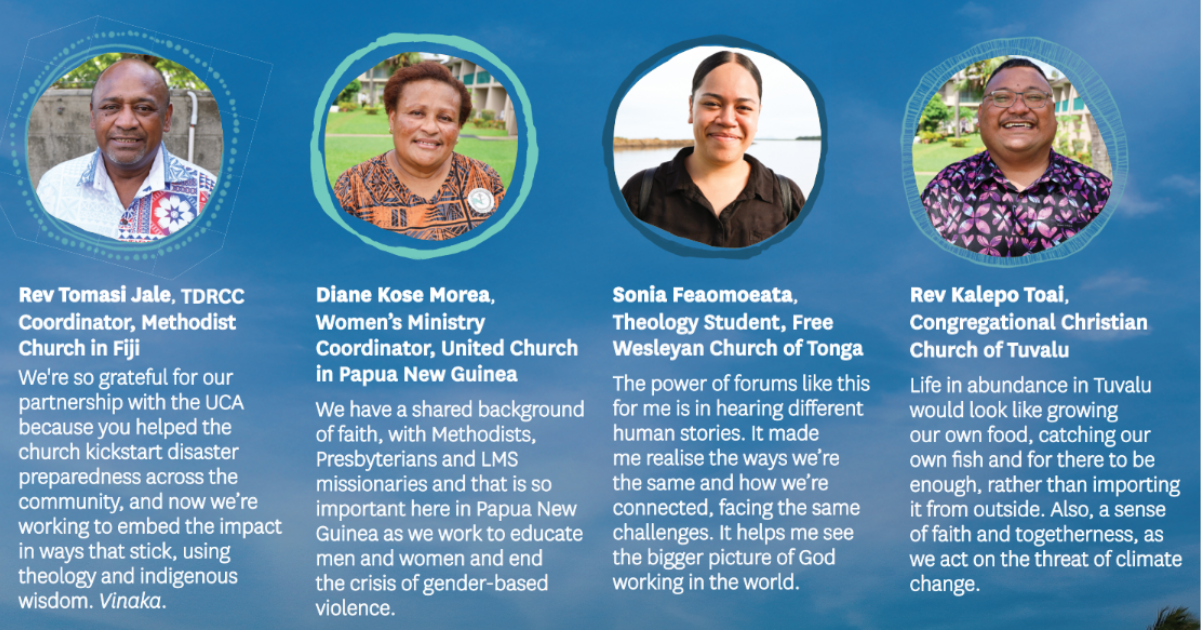
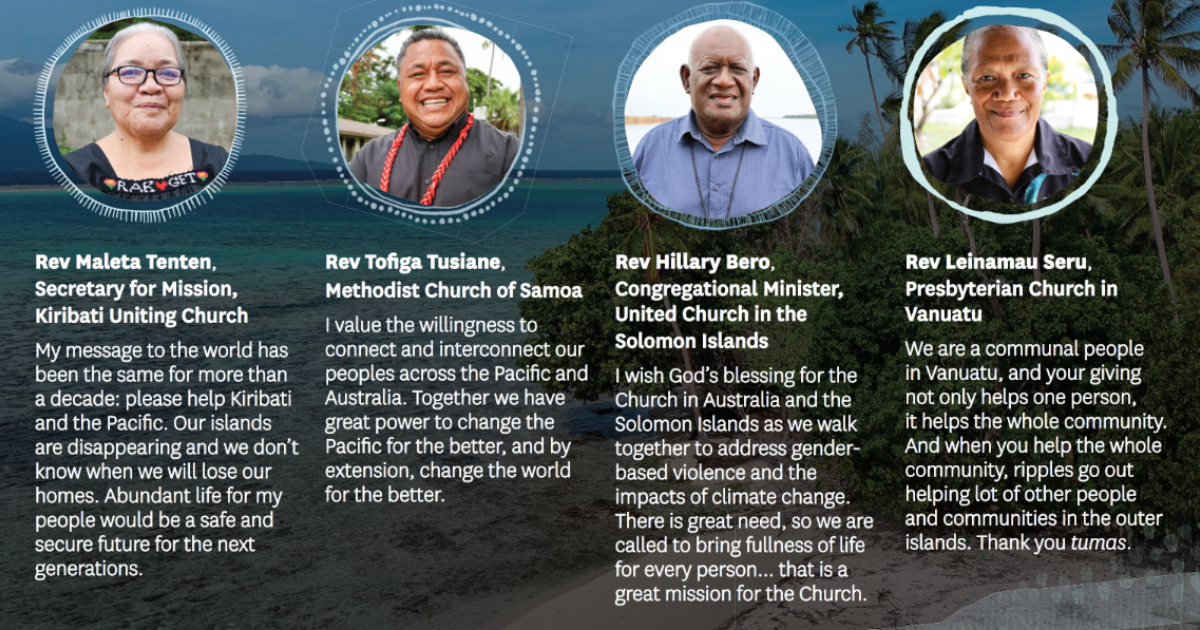
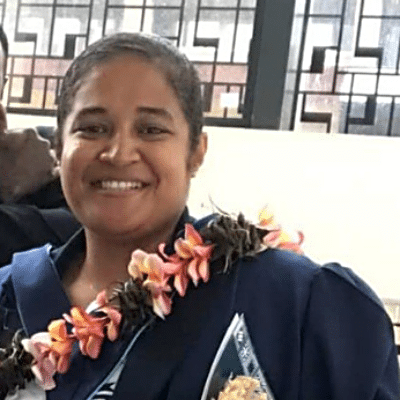
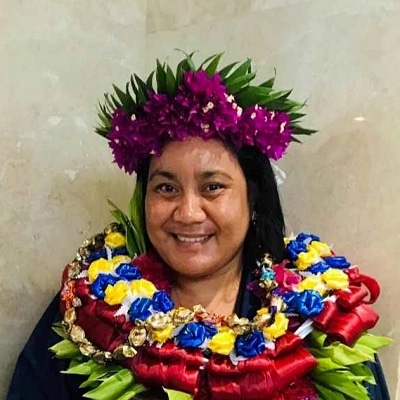
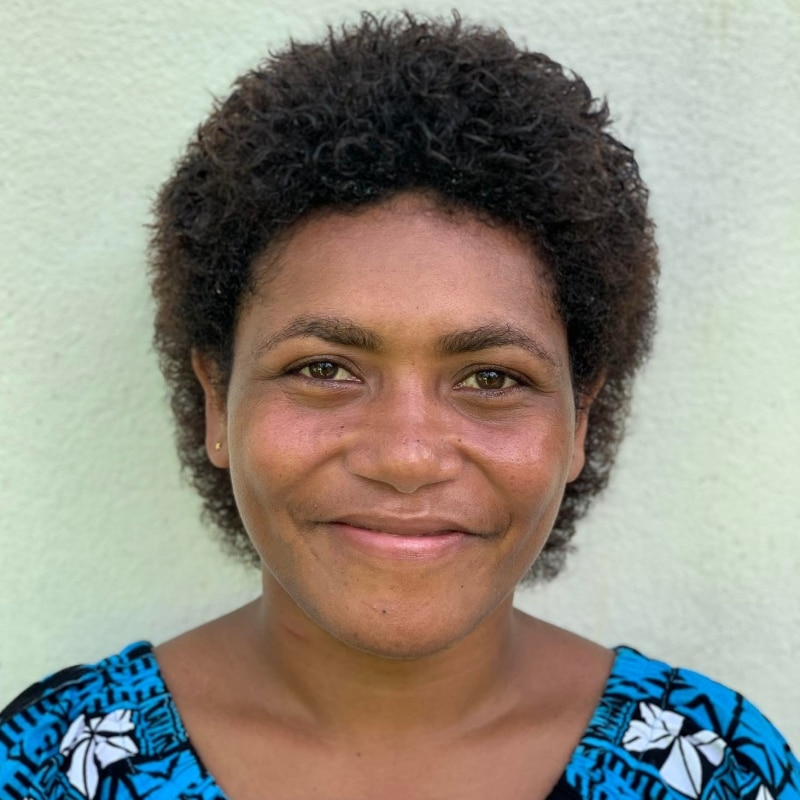
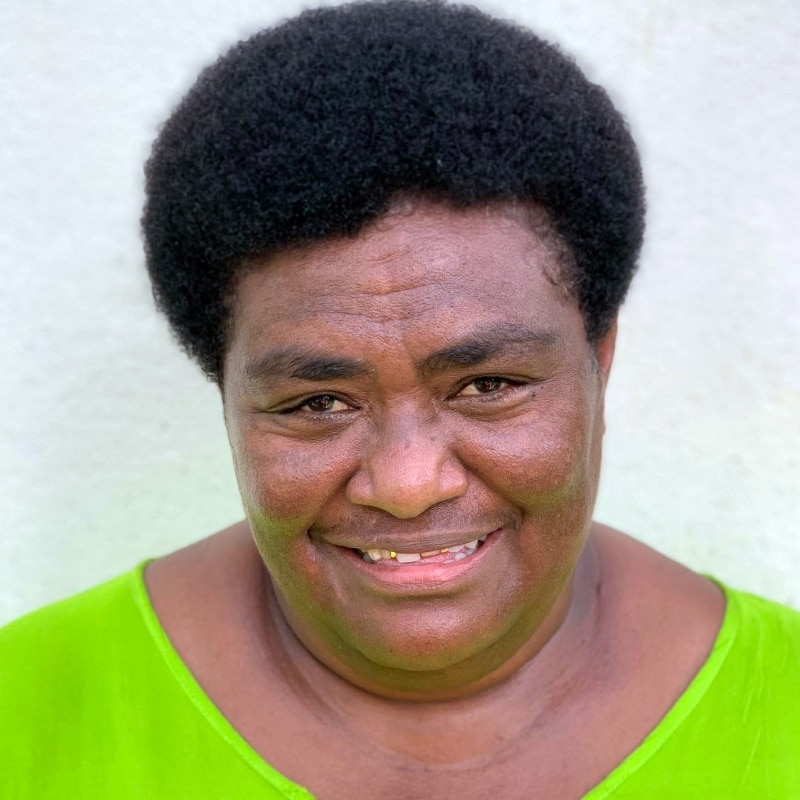
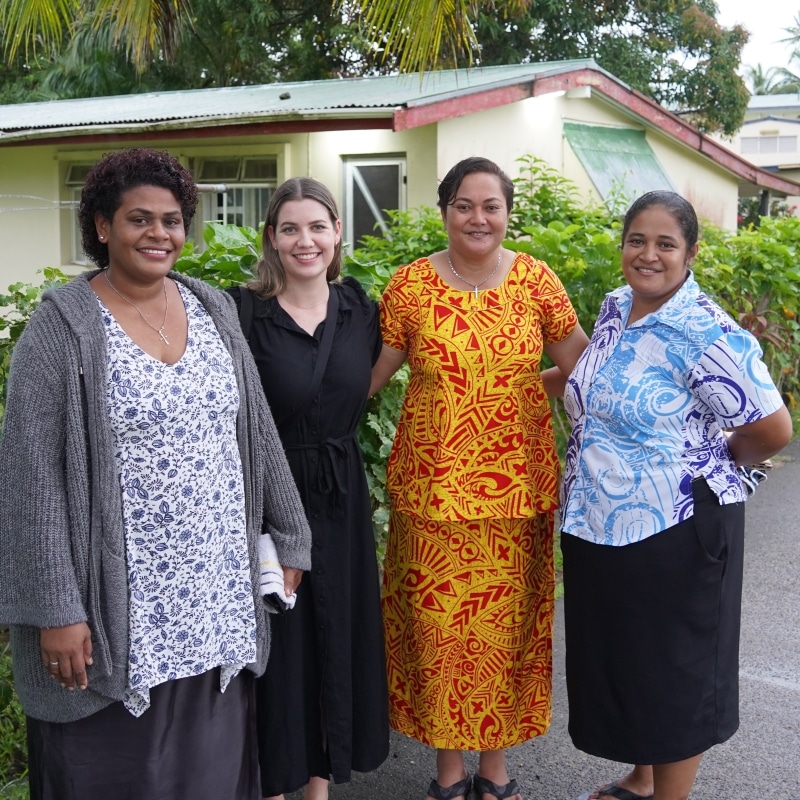
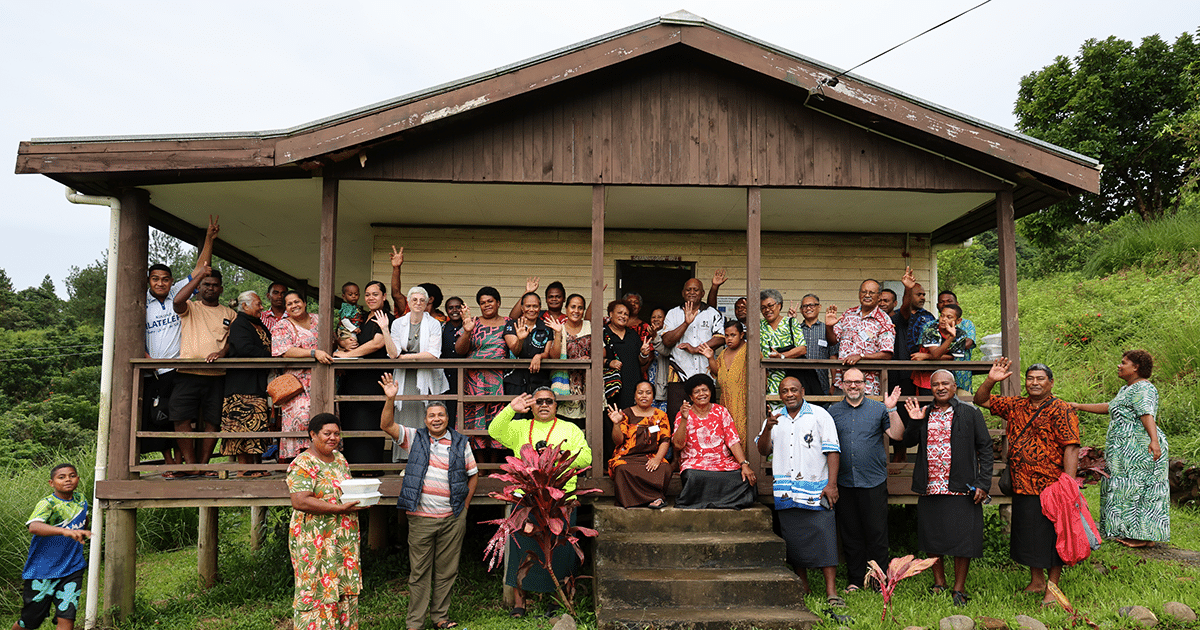
We recently hosted our Annual Pacific Partners Forum in Nadi, Fiji, bringing together delegates from ten Pacific church partners from across the region with a focus on climate resilience and ending gender-based violence.

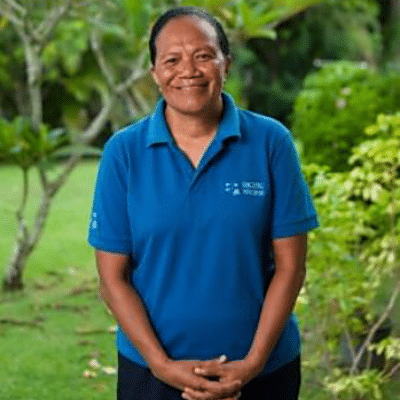
We asked delegates about the challenges they’re facing, what “abundant life” looks like in their communities and what partnership means to them.

Below are some of their answers and messages to you!


UnitingWorld has launched our 2026 End of Financial Year Appeal to support the world’s poorest in the Pacific, Asia and Africa

Every morning, before anything else, Semis pounds rice by hand so her family has enough to eat.

“If I don’t do this today, we don’t eat tomorrow,” she explains, as a matter of fact.

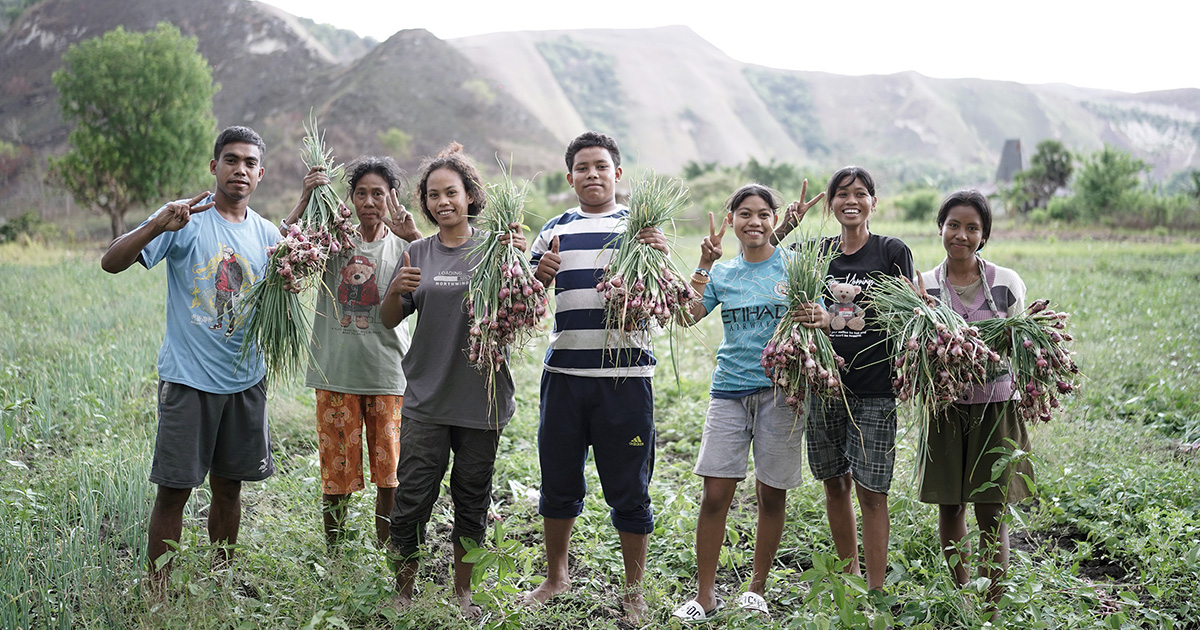
Semis lives in rural Sumba, eastern Indonesia, one of 219 million people in our region living on less than $3 a day. Already living with erratic rainfall and an increasingly arid climate, subsistence farming families like hers are among the most exposed in the world to global economic shocks. When costs rise, hunger follows. When the crop fails, there is no fallback. When the rain doesn’t come, Semis and her husband go into the forest to forage wild roots and plants just to get through.

And yet her hopes are as humble as her life.

“My hope,” she told us, “is for my child to go to school, and for there to be enough to eat.”

That’s it. Not wealth. Just enough, and a future for her daughter she never had herself.

This is what UnitingWorld’s End of Financial Year Appeal is about, working alongside local church partners in Sumba to break the cycle of poverty and hunger for families like Semis’s. Not a handout, but a hand alongside: food gardens, water access, agricultural mentoring, health support for mothers and children.

“I came that they may have life and have it abundantly.” — John 10:10

Your tax-deductible gift before 30 June has up to six times the impact through our partnership with the Australian Government. It’s the most powerful time of year to give.

Find out more and give now here.

20–24 April 2026 | Nadi, Fiji

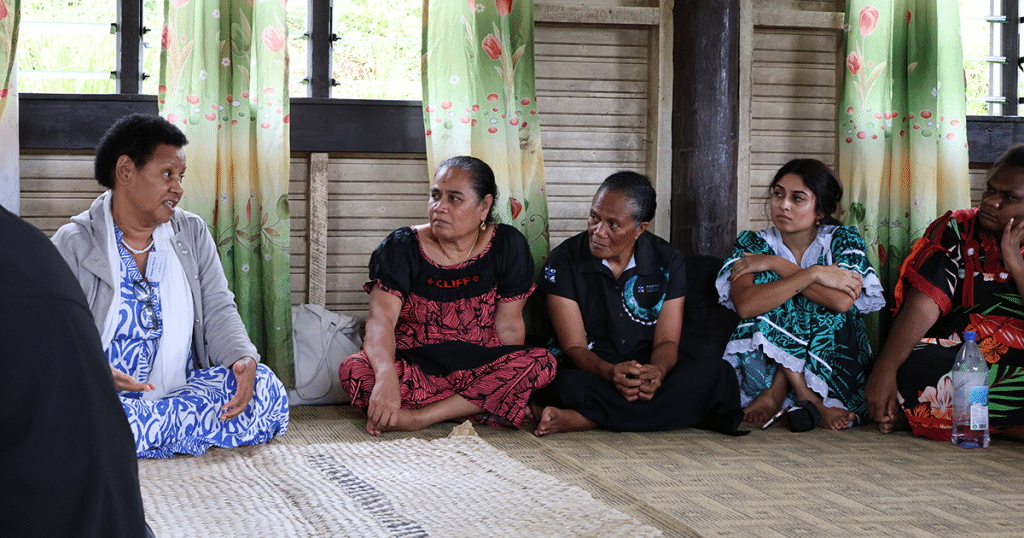
Church and community partners from across the Pacific came together in Nadi, Fiji this week for UnitingWorld’s Pacific Regional Forum 2026, a week of listening, learning and renewing commitment to shared mission.

Participants joined from Fiji, Papua New Guinea, Tonga, Vanuatu, Solomon Islands, Tuvalu, Kiribati and Samoa, alongside UnitingWorld staff, and representatives from the Pacific Conference of Churches and Pasifika Communities University.

Confronting the climate crisis together

The forum brought into sharp focus the devastating human and environmental toll of climate change across the region. With tears and honesty, participants shared the lived reality of rising seas and saltwater intrusion across low-lying atoll nations like Tuvalu and Kiribati, where the threat is not distant but existential.

“The rising seawater is contaminating water sources, degrading agricultural land, and deepening uncertainty for families in Kiribati,” said Uniting Church in Kiribati Secretary for Mission, Rev Maleta Tenten.

“We are now forced to import most of our food, because it is so hard to grow in our soil now. The heath impacts are a crisis. Our islands are disappearing. We urgently need to work together to save Kiribati.”

A community visit brought these realities home. Forum participants travelled to an inland village that had been forced to relocate after deadly landslides destroyed their homes and buried a family alive. It was a sobering, powerful reminder of why disaster risk reduction and community preparedness are central to the church’s work in the Pacific.

Hope, action and equitable leadership

Alongside these difficult stories, participants heard powerful accounts of hope,  churches across the region working together to transform lives and communities. Forum sessions also explored how gender-equitable leadership and participation are essential to building communities that are resilient, prepared and sustainable.

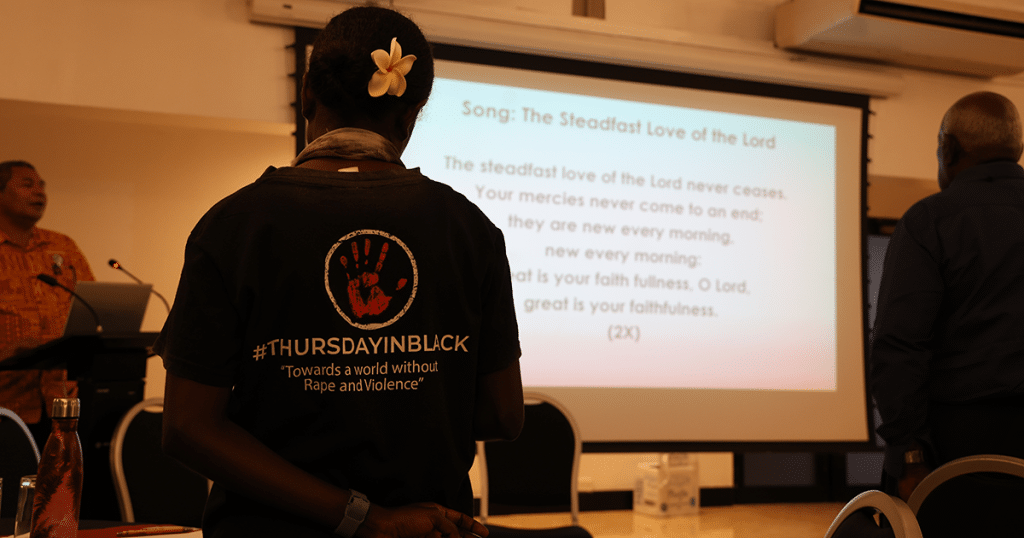
In solidarity with these commitments, forum participants marked Thursdays in Black, the global campaign standing with victims and survivors of gender-based violence, and challenging the cultures of silence that allow it to continue.

Walking together

“UnitingWorld’s Pacific partnerships are built on relationships of mutuality, respect, and shared vision,” reflected National Director Dr Sureka Goringe.

“This forum is one expression of that, a space where Pacific church partners lead, share and strengthen the work they are already doing in their communities, and that we are blessed to support.”


In 2024, we are continuing to support five of the brilliant scholars we supported last year: Asinate, Amalaini and Toobora at Pacific Theological College (PTC), and Mela and Luisa at Davuilevu Theological College (DTC). Both colleges are in Fiji. The scholars are now halfway through Semester 1 of 2024 and are all due to finish their studies at the end of this year. We are also continuing to keep in close contact with Rev Geraldine while she finalises her PhD.

All students are continuing to achieve great academic results.

In big news for PTC, the College is currently transitioning to become a university to be known as Pacific Communities University (PCU)! This transition includes two new schools of the university, infrastructure development and a communities-based model of education.

Thank you to the supporters of our Women in Ministry project. Your support, both financial and prayerful, is so appreciated by the students, their families, their churches and the team at UnitingWorld.

Blessings,

Mia Berry                                                                 Mardi Lumsden
International Programs Manager                  Donor Relations Manager

Student Updates

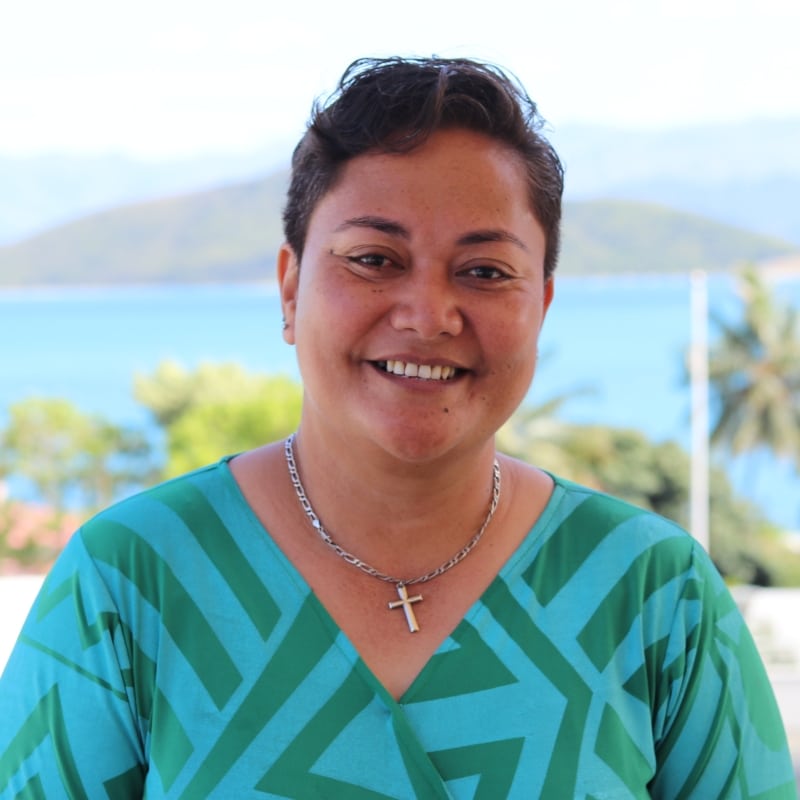
Rev Geraldine is continuing to finalise her PhD thesis. To support her studies she is working part-time at the Institute for Mission and Research at PTC, writing up some of their new coursework which she is really enjoying. She is working closely with her supervisors to submit her PhD by June, and then hopes to take up a teaching position at Davuilevu Theological College.

Rev Geraldine

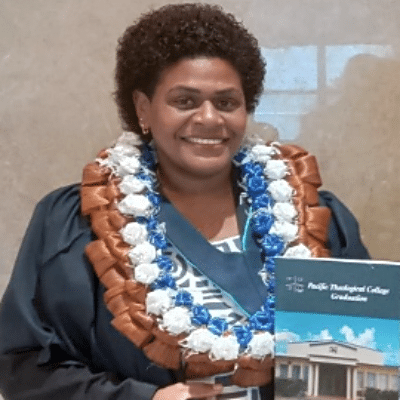
Congratulations are in order for Toobora, Amalaini and Asinate, who all graduated with their Postgraduate Diploma of Theology at the end of 2023; the halfway point to graduating with their Master of Theology (MTh) at the end of this year!

Asinate and Amalaini both noted that one of their standout learnings from last semester was studying different interpretations of the books of Daniel and Revelation. They really enjoyed diving deeper into these parts of the Scripture and shifting their perspectives. Asinate said: “I realised through taking this course last semester that [Revelation] has more to do with the past and what the people of those contexts went through, rather than the future. The book of Revelation is not as scary as we were raised to believe.”

Outside of their studies, Asinate is enjoying being part of the Student Body Association and Amalaini is leading Bible studies for a local youth group most Sundays.

Toobora is currently at home in Kiribati due to delays with processing her and her son’s visas to return to Fiji after the Christmas holidays. She is persevering with her thesis writing from abroad and is in touch with her supervisors, but is wishing to return to the PTC campus as soon as possible.

Amalaini

Asinate

Toobora

Mela has been enjoying putting her learning into practice through her placement church assignment last semester. Mela explains: “These placement churches were meant for us to practically apply what we learned in the classroom, such as ways to serve people, house-to-house visitations, and approaches to talking to a man or woman who is willing to repent.”

Mela found this experience incredibly valuable.

“I have gained skills in approaching different age groups both in theory and in practice,” she said. “I plan to practically use these approaches to meet the spiritual needs of people of all genders, statuses, and races, and to help women with their spiritual needs.”

Mela

Luisa also had some eye-opening experiences in her Institutional Chaplaincy course last semester. As part of the course, she visited different institutions including the CWM Hospital, Naboro Prison, two high schools, Lelean Memorial School, and John Wesley College.

She reflected on her experiences saying, “I can say here that every course I took in my second semester of 2023 was an eye-opener to me. It helps me to know every little thing about the unique spiritual needs of people in the setting where the chaplain serves.”

Luisa

UnitingWorld visit to Suva

UnitingWorld held a Pacific Partner Learning Forum in mid-March in Suva, which saw around 35 people from across our Pacific partner churches meet in Fiji for five days of fellowship, sharing learnings, and shaping future priorities for their regional collaboration. The forum was held onsite at PTC, which allowed us to attend daily chapel and spend time with several staff members at PTC and, of course, the wonderful scholars!

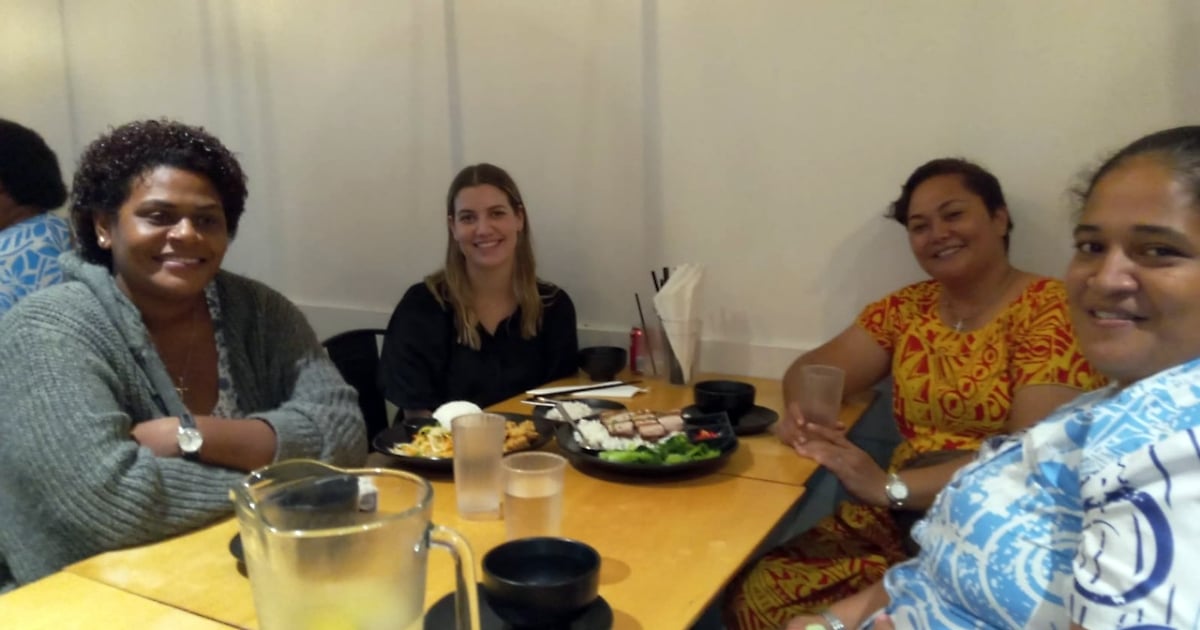
Mia from UnitingWorld shared a meal with Amalaini, Asinate and Geraldine (pictured above) and had a tour of the PTC campus, which was wonderful. Unfortunately, Toobora was in Kiribati at the time.

Past Women in Ministry scholar, Pastor Leinamau from Vanuatu, attended part of the UnitingWorld forum. She is currently completing her PhD at PTC. It was great to reconnect with her and to have her valuable inputs into our conversations on Gender Equality and Child Protection within Pacific churches. UnitingWorld previously supported Pastor Leinamau to study a Master of Theology in 2018-19.

Mia with WiM scholars at PTC
Pastor Leinamau

2024 Easter Message from the Principal of the Pacific Theological College, Rev Dr Upolu Lumā Vaai

‘Mutual Expansive Love and the Victims of Forsakenness?’

In 2022, I shared an Easter message about the victims of forsakenness and hope draped in remembrance. It was a message in response to the victims of the Covid19 pandemic and in particular those still trapped in continued suffering. Today, it seems the wars, the violence and abuses have intensified the unkindness towards the victims of forsakenness around the world. We thought we have moved on, three years later, many are still stuck in the unbearable period of forsakenness, their minds trapped in graphic images of the wounded and dead bodies. These victims are immersed in an unbearable pause between death and life, unable to really see and experience what resurrection feels like.

This time of the year, Christians around the world recite this familiar cry of Jesus, “my God, my God, why have you forsaken me” (Matt. 27:46). Today this familiar cry is heard around the world from ordinary Palestinians since the Israel/Palestine war began. Today the blood of thousands of innocent Palestinian children covers the Gaza strip, bodies freshly pulled out of the concrete and metal rubbles heaped up by the continuous bombing by Israeli military forces. On the 13th of this month of March, the updated statistics by the United Nations of Geneva website reported that more than 14,000 of the 32,000 people killed to date by Israeli airstrikes on Gaza were children. This is a whole island population wiped out if it was a Pacific island. Only a few accounted names from ages zero to 17 are listed by Aljazeera website. That’s almost 50% of those killed. And more than 200 of this number didn’t reach their first birthdays. According to Commissioner-General Philippe Lazzarini of the UN Relief and Works Agency, “12,300 children have died in the enclave in the last four months, compared with 12,193 globally between 2019 and 2022.” Unfortunately, “this war is a war on children…it is a war on their childrenhood and their future.”

These figures do not count more than 73,000 Palestinians injured. Israel also had casualties of 247 soldiers killed with 1,475 injured. These soldiers are also victims of a belligerent system. And then there are those who starve to death. The starvation of children is a hallmark of genocide. A war tactic to obliterate the future of a nation. The failure of the United Nations to bring an end to this unimaginable brutality speaks volumes of a values fluster and the breakdown of a life-centred moral compass to care for what Jesus called, the “least of these.”

One could ask, where is the Christian church in all of this? Last Sunday many Christians celebrated the triumphant entrance of Jesus into Jerusalem. But before that, Jesus cried over the future destruction of Jerusalem by external forces. It seems that any genocide and military destruction is a reason for Jesus’ tears. Some questions to think about: Is it right to worship a God who sanctions a war waged against the innocent? It is right to declare to be true our confessional belief to “love your enemy” while silently nodding in agreement to a war that killed thousands of children? If Christianity came through a history of persecution, is it just to endorse it again?

The recent International Women’s Day ecumenical worship in Suva, Fiji, that focussed on prayers in solidarity with Palestinian women victimized by this Israel/Palestinian war was a classic example. When it was time to pray for victims in particular the Palestinian women, some so-called Christians walked out in disagreement. Perhaps Christians today are more concerned with right and left political and religious extremes that we no longer mourn the severe distortions to life caused by our silence. We no longer feel that war is wrong and state-sanctioned killing is a sin as long as we stay true to our personal truths. Today, those who fight for justice for the victims of this very war are either brushed aside or deemed to be “leading a rebellion” (26:55).

The gospel of Matthew (chapters 26-28) invites us not only to learn Jesus’ siding with the victims of any unjust system, but also to caution us not to repeat to others the same persecutive and violent mistake. In the story, the voice of the forsaken (Jesus) is drowned by the sounds of debates between religious and political leaders, the sounds of violence; the stripping, the mocking, the spitting, including the echoes of being “struck on the head again and again” and “divided up his clothes” (27:28-35) incurred by the powerful and those who work for them.

The same feeling of forsakenness is experienced by our sisters and brothers in West Papua. Just last month in February, a footage of a West Papuan man was widely shared on social media, sitting in a 44-gallon barrel filled with bloodied water being repeatedly cut at the back with a knife, punched, elbowed, hit with sticks and kicked by Indonesian military as he sits without resistance. For decades, West Papuans have “cried out in a loud voice” regarding state-sanctioned killings, human rights abuses, ecological exploitation, and systemic violence by Indonesian military only to be forsaken not only by the UN, but also by many Christians. Forsakenness is deepened when our future, which is meant to be decided by us, is decided by a powerful Pilate or a Caiaphas in a palace somewhere. Hence is the story of West Papuans, Palestinians, and many countries still under colonial control.

Interestingly, the loud cry of Jesus’ forsakenness was not enough to turn heads until Earth (through an earthquake) took over and became the voice of the victim (27:51), capturing the attention of many including the highest-ranking military officer who confessed “he is the son of God” (27:54). A reminder of what Jesus said, “if these people do not speak, these very stones will cry out” (Luke 19:40).

This Easter, I invite us not just to remember in prayers but also to act in deep solidarity with the many victims of forsakenness of the Israel/Palestinian war and also many others. Commemorating this Easter without remembering the Palestinians (or Jewish victims of war) is just faith without love. Easter begins with an unreserved response to the question, do we remember the victims of forsakenness behind the façade of disregard, or do we only disregard them behind the façade of remembrance? It is an invitation to put our hopes again in the memory of God’s mutual expansive love that liberated us ‘with all that is God’. Through this mutual expansive love, we shift the crucifixion narrative from making our children recipients of an undeserved death, “his blood is on us and on our children” (27:25) into making them recipients of unreserved grace. God’s creation gives us pointers to this mutual expansive love that we are moving to celebrate this Easter. Rivers don’t drink their own water, to cite Pope Frances. The rain doesn’t drink its own drops. Plants don’t harvest their own fruits. Bees don’t eat their own honey. Mountains don’t give credits to their own heights. Oceans don’t consume their own fish. Mutual expansive love is about expanding others in our walk while others walk with us in their expansion.

At the resurrection morning, the women expanded their love to include Jesus, the forsaken victim who died at the hands of an unjust system. They remembered where Jesus was buried. They remembered his face. They remembered to worship him. They remembered the way to run back home from the tomb. They remembered to be joyful in the midst of nervousness. The disciples remembered to assemble again as a family for one last time to meet this forsaken victim in a mountain in Galilee. Thus, the resurrection ushers in a new community based on the audacity to remember. A remembrance that is guided by God’s mutual expansive love. This love should give us courage to break down walls, to bind the wounds of the forsaken, carry crosses for the crucified, to roll stones from tombs, to produce arsenals of hope, and to dream change.

Manuia le Eseta!

Rev. Dr. Upolu Luma Vaai
Principal, Pacific Theological College
26 March 2024

Republished with permission.
Download as a PDF

UnitingWorld partners with the Pacific Theological College for the Women in Ministry project.

“As Christians, we are called to walk or to voyage in the way of Christ. To tread lightly on the earth and to sail gently on the seas. We are called to act justly, to be compassionate and to live humbly with our God.”

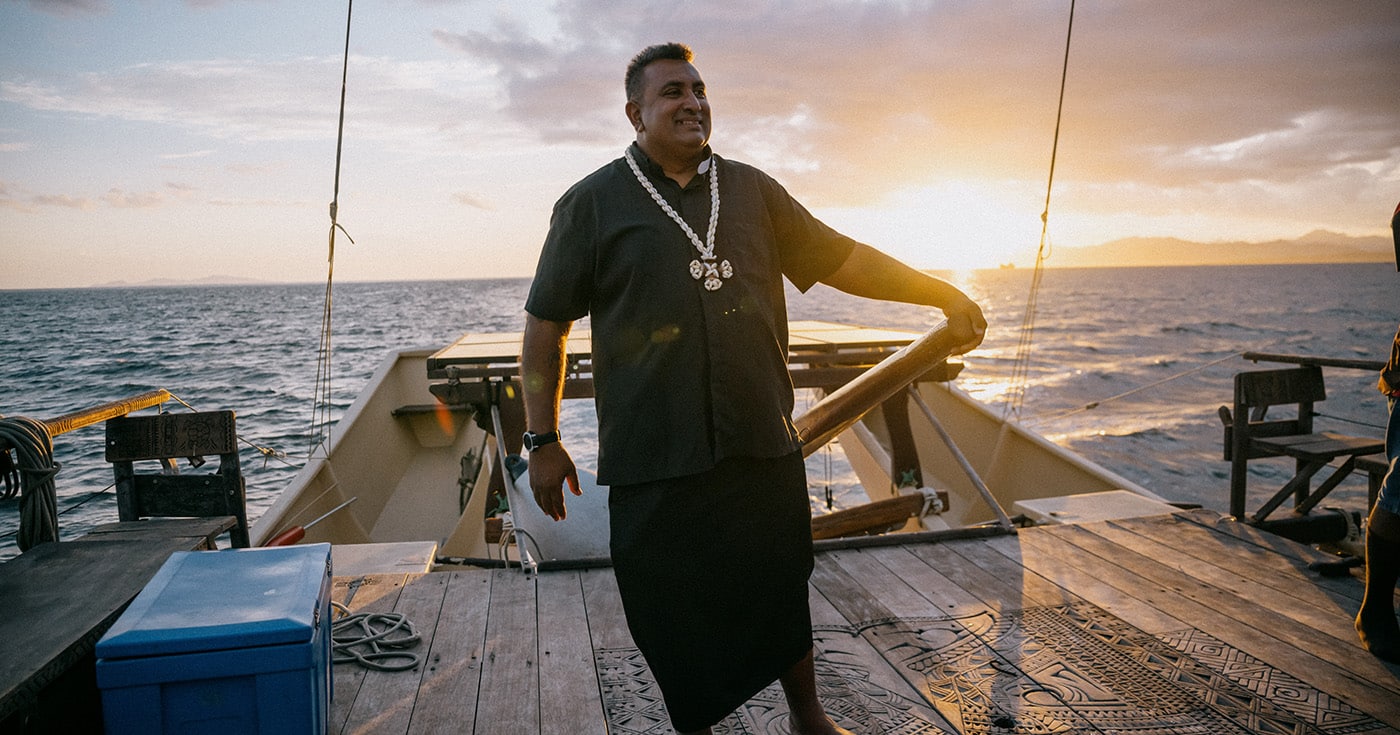
As part of the inaugural UnitingWorld Sunday event, which launched on 7 May, we asked our long-time friend and partner in Fiji, Reverend James Bhagwan, if he would prepare a sermon on what it means for us to be part of the global body of Christ.

As General Secretary of the Pacific Conference of Churches (PCC), Rev James is passionate about ecumenism and working together to see justice in our world.

From the deck of the traditional voyaging canoe, the Uto ni Yalo, he shared a video message on 1 Corinthians 12:14-26 ‘one body, many members’ and what the passage means for people in the Pacific.

“As members of the global family of God, the global household of God, we are reminded that we are our sisters’ and brothers’ keepers,” he says.

“In this time of climate crisis, as creation is groaning, as our sisters and brothers continue to cry out for justice: economic justice, political justice, social justice, justice for creation…

We are called to act.”

During his sermon he also extended a generous acknowledgement of the missionaries who travelled across the Pacific islands, and the importance of the continuing partnerships we hold at UnitingWorld.

In addition to the sermon, a full liturgy, information booklet and worship playlist has also been created to help churches host a UnitingWorld Sunday service and learn more about what we do in partnership with the global church.

Glenbrook Uniting Church, NSW

“The worship resources made it easy to adapt to our congregation,” said Rev Ellie Elia, minister of Glenbrook Uniting Church in NSW.

“The recorded sermon by Rev James Bhagwan was beautiful and powerfully portrayed how we as a local congregation in the Uniting Church in Australia, are a valued part of the ‘crew’ on Christ’s Pacific canoe, through the work of UnitingWorld.

“It was a gift to celebrate and support our global neighbours,” said Rev Ellie.

“The liturgy that was prepared for us was really well done,” said Dr Sue Fairley at Chermside Kedron Uniting Church in QLD. “It’s so exciting to hear about the work of UnitingWorld and to celebrate that this is part of who the Uniting Church is.”

You can host a UnitingWorld Sunday service whenever it suits your church calendar. It’s a great way to connect with our partners and fundraise for their incredible work. You can see the full range of resources and order them for your church at www.unitingworld.org.au/sunday

Watch Rev James’s full sermon below (8 mins).

Direct download video  | Full video credits on the Vimeo page.

Visit UnitingWorld Sunday resources page

The Women in Ministry project supports women in the Pacific to study theology and seek ordination, equipping them for leadership in the Church and community.

UnitingWorld’s Mardi Lumsden and Tanya Lee Fenwick have prepared an update about the scholars currently supported.

“Our determined and resilient scholars have hit the ground running in Semester One. This is the first time all our students have been undertaking post-graduate study. It is a testament to their determination and the support of their churches. We also have some wonderful news to share about past students’ success. In this update, we have included video links with greetings from Rev Geraldine and 2021 graduate Asinate, as well as current student profiles. We encourage you to print these profiles and display them to remind you or your congregation of the women you are supporting. Your support, both financial and prayerful, is so important to the students, their churches and the team at UnitingWorld.”

Click here read the full update.

Download the student profiles (great prompts to learn about and pray for the scholars)

More than 70% of women in the Pacific experience violence at the hands of a man in their lifetimes.

With the vast majority of people across the Pacific self-identifying as Christian, Pacific churches have been taking responsibility to speak up for the rights of women and girls, and calling out violence and inequality as a sin. As part of their mission to support the welfare of communities, churches have been using biblical teaching to encourage men and boys to understand that gender justice sets people everywhere free to live life to the full.

While many countries in the Pacific escaped the health impacts of the COVID-19 pandemic, lockdowns and economic slow-downs placed additional pressure on communities already at risk of gender-based violence. UnitingWorld supported partner churches to step up their efforts to protect women’s safety and autonomy during a season of extreme crisis.

Pastor Dorothy remembers being astonished by the idea that God’s vision for humanity included equality between women and men.

“I attended my first workshop in December 2018 with Rev James Bhagwan from Fiji, who opened the Bible to show how gender equality is part of God’s plan for us,” Pastor Dorothy remembers. “It was incredibly eye opening. I had never seen it before, and it had certainly never been taught in theological college.”

Pastor Dorothy is now the Gender Equality Theology Minister with the Presbyterian Church of Vanuatu in a part of the world where women are too often held back from reaching their full potential. Men are the traditional gatekeepers of power and authority, and women have often been regarded as possessions, to be disciplined in whatever way a man chooses.

“The work we do is critical and allows me to help all different groups of people–clergy, administrators, congregations and children–to understand how equality between men and women is part of the Biblical story,” Pastor Dorothy says. “We work together to make practical changes like stopping family violence and giving women opportunities to lead in our homes, families, churches, communities and nation.” The Presbyterian Church of Vanuatu is actively evangelistic, and has oversight of schools and colleges, as well as a theological college to equip its ministers.

Like many Pacific nations, Vanuatu is constantly threatened by natural disasters and their impacts on people’s livelihoods and the wider economy. Alongside the gender justice work, the Presbyterian Church also educates people about the need to be prepared for and actively work against climate-related disasters.

“As a church we draw inspiration from John 10:10 where Jesus says, “I have come that you may have life, and life in abundance,” says Pastor Dorothy. “That means the gospel is relevant for every aspect of life. Jesus is a very practical saviour for humanity, a man of justice and compassion.”

UnitingWorld supports this Pacific-contextual biblical teaching, developed and led by respected Pacific theologians, to work in and through churches to address violence and advocate for gender equality. It challenges the patriarchal ideas of ‘male headship’ and ‘wifely submission’ that often justify gender-based violence, countering them with Bible-based theology of gender equality and respectful relationships.

Ultimately, this work shifts behaviours by changing beliefs: churches develop equality and protection policies, and preach and model equality in their communities.

Between January and June 2020, UnitingWorld’s partners delivered Bible-based messages supporting national government health and domestic violence advice to 49,675 people across four countries. This past financial year, 23,109 men and women engaged with our gender equality program.

Click here to find out more about the Gender Equality Theology project.

Want to support this life-changing work?

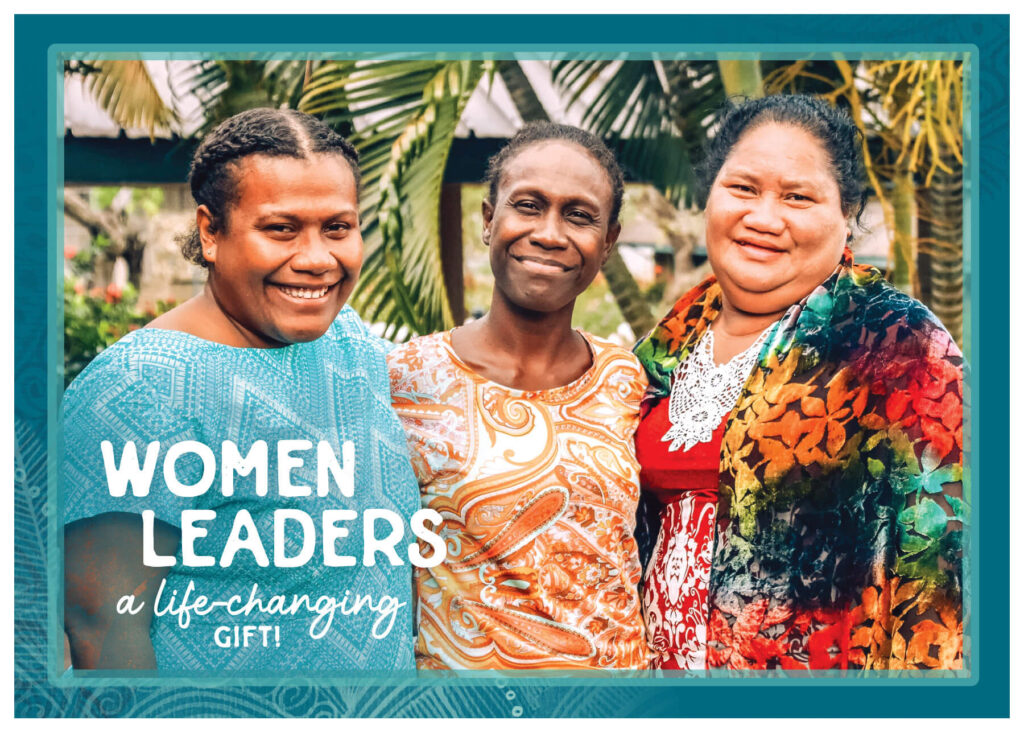
Give a gift card to support women leaders this Christmas.