1800 998 122Contact

Pacific Tag

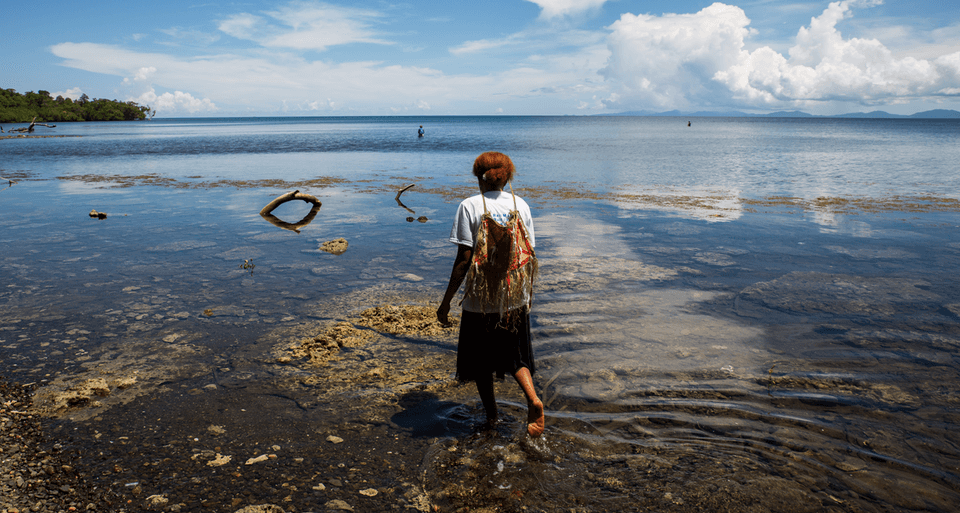
I travelled with my family as part of an Exposure trip through UnitingWorld to Fiji. One of the most meaningful experiences for me was going by speedboat to the island Ovalau, significantly damaged by Cyclone Winston in February of 2016.

Talking to our guide James Baghwan, we came to understand that the majority of the people on the island barely had the means to provide for their family’s basic needs. They don’t have the capability to move somewhere else, even to the main island, where they would be better equipped during times of cyclones. Even if they did, most are living on the land that their ancestors did, and so have significant cultural and historical ties to the land, which provides them with a sense of identity.

Cyclone Winston was expected to completely miss the island, and so the people were unprepared. You can imagine the chaos, panic, and terror they would have experienced in the mad rush to secure what little they had with heavy materials and find a place where they might be safe. The damage was strong enough to beach a ship, lift up and move water tanks as well as destroy houses and buildings.

James told me people would probably have run up the mountain and lay on one of the ringing roads, holding onto whoever or whatever they could. They would have stayed like this for many hours, desperately hoping and praying that they wouldn’t be blown away or hit by debris, all the while listening to the terrifying sounds of everything they knew being ripped violently apart.

We can only begin to imagine the fear, panic and desperation they would feel and how psychologically damaging this would be. Their whole lives dictated by this fear, trapped in this cycle of working to repair what is lost only to see it destroyed the next time and have to begin again.

This fear would only be intensified by the threat that global warming places on them – of bigger, more powerful, more unpredictable cyclones. Add to this the sheer frustration they must feel watching the powers of the world – who could do something to help them or to help prevent global warming – yet who debate that it exists.

After this conversation, I began to wonder: in the midst of all of this, how do people on that island find true peace and happiness, when they are under such threat and have so little? And the people that we met did seem happy and were welcoming.

And it reminded me of a Bible passage from Matthew 6:19-24: “Do not store up for yourselves treasures on earth, where moths and vermin destroy, and where thieves break in and steal. But store up for yourselves treasures in heaven, where moths and vermin do not destroy, and where thieves do not break in and steal. For where your treasure is, there your heart will be also.”

Thanks to sixteen year old Hannah for allowing us to share her reflection with you.

If you’re keen to find out more about what the Pacific church is doing to protect against cyclones and how they’re working to save lives in disaster, read more about the project or make a donation here.


The Pacific Conference of Churches (PCC) has called for the urgent implementation of the 2015 Paris climate agreement, and for leaders to hear the voices of Pacific Islanders – the most vulnerable people to the impacts of climate change.

The PCC made its statement during a meeting of church leaders in Auckland, New Zealand this week.

The meeting comes as Fiji prepares to chair the 23rd Conference of Parties (COP23), the annual climate change conference of 196 countries to be held in Bonn, Germany in November.

The statement calls on governments to increase their pledges to keep the global average temperature rise below 1.5℃, and to support local and community-based approaches to risk management and climate change resilience.

The Pacific Church leaders said: “We exercise our prophetic voice as churches and believers of the faith to amplify the cries of our people and Moana (ocean) who are directly or indirectly affected by climate change and encourage the spirit of stewardship among ourselves as custodians of God’s creation.”

“We recognise the existing local knowledge and community strengths as an important factor in building a more sustainable and climate resilient Pacific. We call for full consultation and participation of our communities in national climate adaptation planning processes… and to create a new culture of proactive rather than reactive risk management.”

UnitingWorld this week launched an appeal to support our partner churches in the Pacific as they build critical resilience to disasters and climate change. Our partners have highlighted their urgent need for disaster preparation and how it will save lives in their communities.

The PCC also issued statements on nuclear proliferation in the region and a series of ‘calls to action’ on the self-determination of Papua New Guinea’s Autonomous Region of Bougainville, the French territory of New Caledonia and the Indonesian provinces of Papua and West Papua.

Pacific church leaders also called on churches in Australia and New Zealand to be spaces where Pacific Island diaspora communities are affirmed of their identities.

The PCC is a fellowship of 27 churches and nine member councils of churches in 17 island states across the Pacific. The Uniting Church in Australia is a member.

To commemorate the 75th anniversary of Australia’s worst maritime disaster, the sale of Margaret Reeson’s books will support UnitingWorld’s work in the Pacific.

On 1 July 1942, the Japanese ship Montevideo Maru was sunk by an Allied submarine off the coast of off the coast of Luzon, Philippines. It was later revealed that it was carrying more than 1000

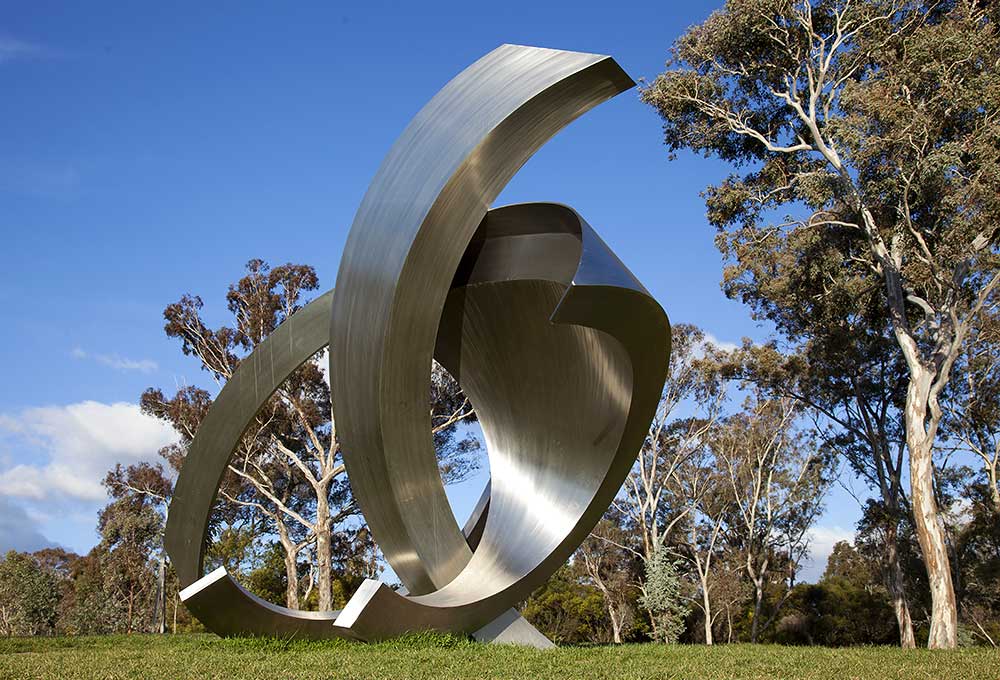
Montevideo Maru memorial at the Australian War Memorial, Canberra

prisoners of war, mostly Australians, all of whom died in the sinking. The tragic event remains Australia’s worst maritime disaster.

A lesser told story, is that among the prisoners were ten Methodist missionaries who had been captured by the Japanese in Rabaul, Papua New Guinea and were being transferred to Hainan, off southern China.

Margaret Reeson, a prominent author, historian and leader in the Uniting Church in Australia has written two books on the sinking of Montevideo Maru, recounting the untold stories of the prisoners, survivors and the families who waited years for reliable news about their loved ones. Margaret herself was a Methodist missionary who worked in the Highlands region of Papua New Guinea in the 1960s and 70s.

To mark the 75th Anniversary of the Montevideo Maru, Margaret Reeson’s two books are on sale and 75% of the proceeds will go to UnitingWorld’s work in the Pacific.

A Very Long War (2000) $20

Describes the deep impact on those affected by the sinking of the Montevideo Maru, the families of the missing and the wider Rabaul community.

“A respectful narrative, beautifully told…shocking stories treated with insight and restraint. A book of hope and healing.”

“A tragic and largely uncommemorated episode of Australian war history, although this sensitive book, generously illustrated, goes some way towards rectifying that omission.” —The Australian

Whereabouts Unknown (1993) $24  

The moving story of those who disappeared after the fall of Rabaul in 1942, the mystery of the loss of over 1000 POW’s with the sinking of the prison ship Montevideo Maru, and the pain of wives and families who waited in vain for news. It also recounts the experiences of a handful of Australian nurses, captured and transported to Japan, four of them Methodist missionaries.


To Purchase

Contact  Ron Reeson rdreeson@bigpond.com Ph 02 6262 3677

Payment by cheque or bank transfer (details can be provided)

Postage (anywhere in Australia) 1 book $6; 2 or more books $10

Media Release
5 May 2017

UnitingWorld will facilitate it’s fourth Annual Regional Workshop for Women’s Fellowships to be held in Nadi, Fiji from 22 – 26 May, 2017. This year the workshop will focus on gender equality, church transformation, partnership and projects.

The workshop will continue to build on the shared learning and experiences of participating organisations from across the Pacific, with practical assistance for running effective community development projects; understanding and advancing gender equality within churches; and promoting the leading role of women and women’s fellowship organisations in transforming churches and communities.

Having facilitated workshops in previous years, UnitingWorld Pacific Program Manager Bronwyn Fraser has seen the power of women leaders coming together from across the Pacific to share resources and learn from one another’s experiences.

 “Bringing these women together to share knowledge and stories from the field is not only an excellent way of learning from one another, it’s also valuable self-care and solidarity for them – knowing there are many other women out there working to overcome the same challenges,” she said.

There will also be sessions the on theology of gender equality and God-given human dignity for women, reflecting on Rev Dr Cliff Bird’s recent Bible study resource, ‘God’s Vision for Human Relationships Vol. 2’. As in previous years, the workshop will continue to focus on the practical, discussing how to embed gender equality within churches and how women’s fellowship organisations can implement practices of gender equality in their development projects.

 “Participants will be invited to discuss how traditional interpretations of the Bible have defined women and how God’s view of equality shifts these expectations and provides women with the opportunity see their worth as equally created in God’s image and likeness for abundant life,” said Bronwyn Fraser.

This workshop, part-funded by Australian Aid, is part of UnitingWorld’s Partnering Women for Change Program (PW4C), which focuses on the strength of women to identify and address key development challenges in their own countries and communities. UnitingWorld works with churches and ecumenical networks to challenge traditional patriarchal views of the Bible, in favour of a framework that sees the Bible as a foundation for advancing equality, inclusion and dignity of all human beings. The PW4C Program also works closely with women’s fellowship organisations in supporting voice and leadership opportunities for women within churches and community.

The Partnering Women for Change Program is partly supported by funding from Australian Aid.

Dated: 5 May 2017
Contact:
Bronwyn Fraser +61 401 023 756
bronwynf@unitingworld.org.au

Read more:

UnitingWorld: Gender Equality in the Pacific Through Theology (Pacific Women)

A Biblical take on Human Rights – Bridging the Gap for Gender Equality in the Pacific

Case study: Faith and Gender Equality in the Pacific (DFAT)